NFL Over/Under Strategy: Defensive Matchups and Totals Markets
 Available in US
Totals Market Inefficiencies: Profiting from Weather Adjustments
Everybody wants to pick winners. Walk into any pub during an NFL Sunday and the conversation is always about which team covers the spread, which underdog pulls off an upset. Nobody’s arguing about whether the Chiefs-Bills total should be 49.5 or 51. That’s exactly why the totals market is where I’ve found the most consistent edges over nine years of NFL betting.
Spreads attract the bulk of public money. Bookmakers sharpen those lines relentlessly because every recreational punter has an opinion on who wins. Totals, by contrast, draw less attention and less volume — which means the lines adjust more slowly to new information. When the 2025 season saw favourites cover the spread only 47.8% of the time, a significant drop from the prior year’s 53.3%, sharp bettors who had shifted portions of their bankroll to totals markets were less affected by that turbulence. Totals don’t care which team wins. They care about the combined score, and that’s driven by factors most casual bettors overlook entirely.
The structural advantage is straightforward. Totals depend on pace, defensive efficiency, weather, and game script — all quantifiable variables. Spread betting depends on those same variables plus the unpredictable element of which team makes fewer mistakes at crucial moments. Fewer moving parts means more reliable modelling. And more reliable modelling means an actual, repeatable edge.
Key Numbers in NFL Totals: 41, 44 and 51
If you’ve spent time on key numbers in spread betting, you already know that 3 and 7 dominate margin-of-victory distributions because of field goals and touchdowns. Totals have their own key numbers, and understanding them gives you an immediate advantage in timing your bets.
The most common combined scores in NFL games cluster around 41, 44, and 51. These numbers appear because of the scoring structure: touchdowns (7 with the extra point), field goals (3), and the combinations they produce. A game where each team scores three touchdowns and a field goal finishes at 48 total points. Two touchdowns and two field goals each lands at 40. The distribution isn’t uniform — it spikes at specific totals, and those spikes create opportunities.
When a bookmaker posts a total at exactly 44 or 41, you’re sitting on a key number. Buying a half-point in either direction (moving the line from 44 to 43.5 or 44.5) has a measurably different impact than buying a half-point at, say, 46. The probability mass clustered at key numbers means that half-point costs less in expected value terms relative to the protection it provides. I don’t always buy points on totals, but when the line sits directly on a key number, I’ll pay the extra juice more often than not.
One thing worth noting: totals key numbers are less powerful than spread key numbers. A final combined score of exactly 41 happens less frequently than a margin of victory of exactly 3. But they’re still meaningful enough to influence your timing — particularly when you’re deciding whether to bet now or wait for line movement.
Pace, Defensive Rankings and Their Effect on Game Totals
I once backed an over in a game between two teams that had both scored 30+ points the previous week. Felt obvious. The total was 52, and the final combined score was 31. What went wrong? I’d looked at points scored without looking at why those points were scored. One team had faced a depleted secondary the week before. The other had benefitted from three short-field turnovers. Neither factor carried over to the new matchup.
Pace — specifically, plays per game and seconds per play — is the foundational metric for totals analysis. A team running 68 plays per game creates more scoring opportunities than one running 58. But raw pace needs context. The New England Patriots’ EPA/play jumped from -0.095 in 2024 to 0.119 in 2025, an improvement of +0.214 that ranked second in the league. That efficiency gain meant their increased pace translated directly into points, not just more snaps. A high-pace team with negative EPA/play might actually produce fewer points than a slow, efficient one because they’re generating more possessions but wasting them.
Defensive rankings matter equally, but I weight them differently depending on the matchup. Against a pass-heavy offence, I focus on pass defence DVOA. Against a run-first team, rush defence DVOA takes priority. The composite defensive ranking — the one you see on most stat sites — blends these, which can mislead you. A defence that ranks 10th overall but 25th against the pass is vulnerable in a matchup against a top-5 passing offence, even though the headline number looks solid.
The framework I use: pace sets the ceiling for total points. Offensive efficiency determines how much of that ceiling gets reached. Defensive efficiency determines how much gets suppressed. Plot all three and you’ll find games where the posted total doesn’t reflect the matchup dynamics — and that’s where your bet lives.
Wind, Rain and Cold: Quick Adjustments for Totals Bets
Weather is the single most underpriced variable in NFL totals betting. I’ve tracked this obsessively. Bookmakers adjust for weather, but they consistently under-adjust — particularly for wind.
Wind above 15 mph measurably reduces passing efficiency. Deep throws become unreliable, field goal accuracy drops, and punting becomes chaotic. In games with sustained winds above 20 mph, total points drop by an average of 4-6 compared to calm conditions. If the posted total hasn’t moved by at least 2-3 points to account for a strong wind forecast, the under holds value.
Rain affects ball security more than passing accuracy in modern NFL offences. Fumble rates increase in wet conditions, which creates unpredictable scoring swings — sometimes boosting the total (defensive touchdowns from turnovers) and sometimes suppressing it (stalled drives after turnovers). I treat rain as a totals-neutral factor unless it’s combined with wind or cold, at which point the suppressive effects compound.
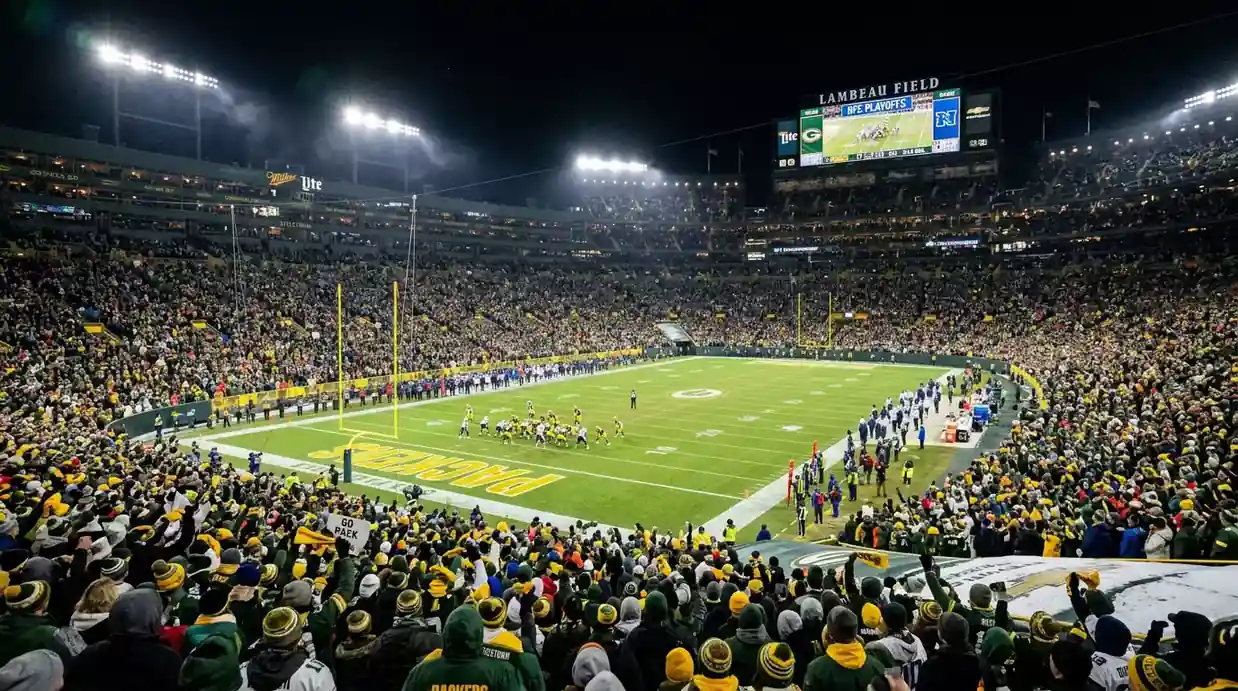
Cold — specifically temperatures below 0 degrees Celsius — hurts passing games and benefits rushing attacks. Since rushing drives consume more clock and produce fewer points per possession than passing drives, the net effect tilts toward the under. This effect amplifies when a dome team travels to an outdoor cold-weather venue. Teams like the Arizona Cardinals or Las Vegas Raiders playing at Buffalo or Green Bay in December face conditions their players literally haven’t experienced in practice. The detailed weather impact analysis covers specific thresholds and data, but for quick totals adjustments, cold plus wind is the strongest under signal in the NFL.
First-Half and Quarter Totals: A Narrower Edge
Billy Walters — the most successful sports bettor in modern history — once said that parlays and teasers are fun but fundamentally unprofitable over time at current odds. The same healthy scepticism applies to first-half and quarter totals: they’re entertaining and feel like they offer precision, but the edges are thinner and harder to sustain.
First-half totals strip away fourth-quarter variance, which sounds appealing. No more garbage-time touchdowns inflating scores. No more prevent defence turning a blowout into a backdoor cover. The problem is that bookmakers know this too, and they price first-half totals with tighter margins precisely because the outcome window is shorter and more predictable.
Where I’ve found pockets of value in first-half totals is in specific game-script scenarios. Teams with conservative opening drives — those that script their first 15 plays with heavy run-pass balance and shorter routes — tend to produce lower first-quarter scores than their overall offensive profile suggests. If you can identify these tendencies from film study or play-calling data, first-half unders become viable. But the edge is narrow, so I keep stakes small — typically half my standard unit on full-game totals.
Quarter totals, especially fourth-quarter totals, are even more volatile. The variance in a single 15-minute period is enormous. I’ve seen fourth quarters finish 0-0 and I’ve seen them finish 28-21. Modelling a single quarter with enough confidence to bet requires granular situational data that most publicly available sources don’t provide. I leave quarter totals to bettors with access to proprietary models — or to those treating their bankroll as entertainment budget rather than investment capital.
The broader point: totals betting works best with full-game markets where you have enough data, enough plays, and enough time for the underlying probabilities to express themselves. The narrower the window, the more noise dominates signal.
What factors most influence NFL over/under lines?
Three factors dominate: offensive pace (plays per game), defensive efficiency against the opponent’s specific offensive style, and weather conditions. Pace sets the ceiling for total scoring opportunities. Defensive matchup quality determines how many of those opportunities convert to points. Wind above 15 mph and sub-zero temperatures consistently suppress totals by reducing passing efficiency and field goal accuracy. Weather is the most commonly underpriced of the three.
Are first-half totals easier to predict than full-game totals?
First-half totals remove fourth-quarter variance, which reduces noise — but bookmakers price them with tighter margins to compensate. The edge on first-half totals is narrower than on full-game totals. They work best in specific game-script situations, such as teams known for conservative opening drives, where scripted play-calling creates a predictable early-game pace. For most bettors, full-game totals remain the more reliable market.
How does indoor vs. outdoor play affect NFL totals?
Indoor games remove weather as a variable, which generally produces higher-scoring, pass-heavy contests. When a dome team travels to an outdoor venue in cold or windy conditions, the totals impact compounds — their players and scheme are less adapted to those conditions. Conversely, two outdoor teams meeting in a dome may push totals higher than their season averages suggest, because both offences benefit from the controlled environment.
Prepared by the nfl Betting Strategies editorial staff.