NFL Live Betting Tips: In-Play Strategy and Odds Timing
 Available in US
Table of Contents
- In-Play Betting Markets: Capitalizing on Live Odds Fluctuations
- How Live NFL Odds Move: Algorithms, Latency and the Information Gap
- Momentum Triggers: Turnovers, Scoring Droughts and Overreactions
- Quarter-by-Quarter Timing: When the Live Line Is Softest
- Halftime Betting: The Hidden Window for Informed Punters
- Live Totals: Reading Pace and Weather Mid-Game
- Live NFL Betting on UK Platforms: Speed, Depth and Lag
- Five Live Betting Traps and How to Sidestep Them
- NFL Live Betting Questions Answered
In-Play Betting Markets: Capitalizing on Live Odds Fluctuations
The best NFL bet I placed last season wasn’t a pre-match handicap. It was a live spread on the Buffalo Bills at halftime, after they’d fallen behind by ten points to a Denver team that had no business holding that lead. The live line had swung to Bills +4.5, the public had panicked, and I knew from the EPA data that Buffalo’s offence was moving the ball efficiently despite the scoreboard. They won by seven. That’s in-play betting at its best — catching the market in the middle of an emotional overreaction and stepping in with a data-informed position.
About 48% of bettors still prefer pre-match wagers, but the 25% who focus on live betting represent the fastest-growing segment of the market. Paddy Aherne, head of trading at FanDuel’s Dublin office, explained the operator perspective: even when it was early in the US, they wanted to manage the full cycle of an NFL weekend schedule, allowing them to surface markets quicker and leverage their pricing opinion more effectively. That ambition is shared across UK and US operators, and the result is a live betting product that’s deeper and faster than it was even two years ago.
The edge in live betting comes from one fundamental reality: algorithms reprice faster than they understand. Live odds engines react to events — touchdowns, turnovers, penalties — within seconds, but they struggle with context. A pick-six thrown by a quarterback who’d been shredding the defence for three consecutive drives doesn’t mean the offence is broken. It means one bad play happened. The algorithm treats the event as a significant shift in win probability; the informed bettor treats it as noise. That gap between algorithmic reaction and contextual understanding is where in-play profit lives.
How Live NFL Odds Move: Algorithms, Latency and the Information Gap
To beat a live line, you need to understand what moves it. NFL in-play odds are set by a combination of algorithmic models and human oversight. The algorithm ingests real-time data — score changes, down and distance, time remaining, field position — and recalculates win probability after every play. A human trader monitors the output and can override or suspend the market when the model produces prices they don’t trust, usually during injury stoppages or replay reviews when the situation is ambiguous.
Latency is the first variable. There’s a delay between what happens on the pitch and when the live odds update in your app. On a UK bookmaker’s platform, that delay can range from three to ten seconds, depending on the operator’s data feed and the specific event. A turnover — fumble or interception — triggers the biggest repricing, and books often suspend markets for 10-30 seconds while the new odds are calculated. If your book is slow to suspend or slow to reprice, you have a brief window to bet at stale odds. But be careful: operators know this, and bets placed during obvious pricing lag are sometimes voided or restricted.
The information gap is the second variable, and the more exploitable one. Live odds models weight recent events heavily. A team that scores two quick touchdowns will see their live win probability spike, even if the underlying performance data (EPA, success rate) suggests those scores came from unsustainable big plays rather than methodical drives. The model doesn’t distinguish between a 75-yard catch-and-run and a 12-play, 75-yard drive — both add seven points and shift the probability by a similar amount. You, watching the game and tracking the context, can make that distinction.
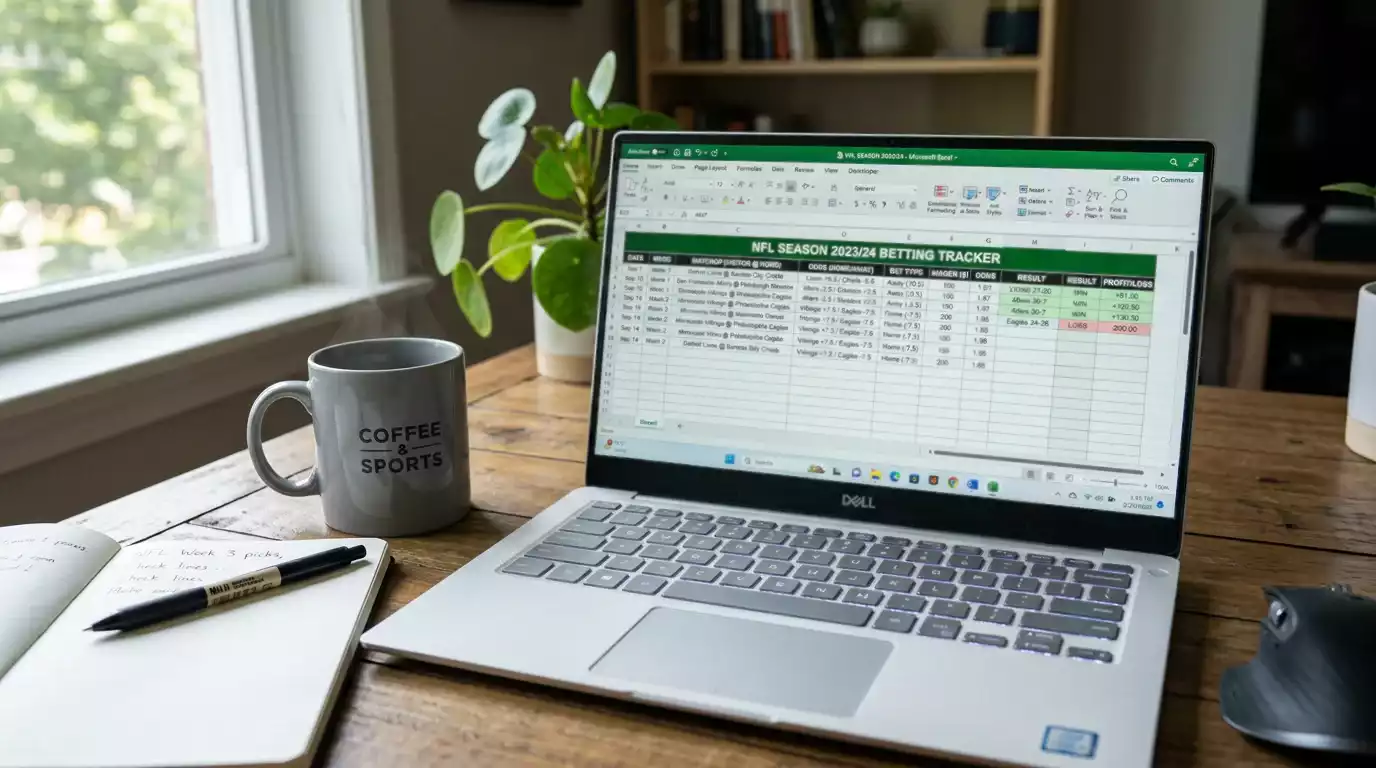
My approach is to watch with a notebook (or spreadsheet) open, tracking drive outcomes and play quality in real time. When the live line diverges from my running assessment by more than a couple of points, I look for a bet. When the line aligns with what I’m seeing, I stay out. The discipline is in waiting for the divergence rather than betting on every shift.
Momentum Triggers: Turnovers, Scoring Droughts and Overreactions
Turnovers are the single most overreacted-to event in NFL live betting. When a quarterback throws a pick-six, the live spread swings violently — often by four to six points within seconds. The crowd groans, the broadcast shows a replay from five angles, and the betting public hammers the other side. But in the 2025 season, favourites still won 65.9% of games outright, and a single turnover in the first half rarely predicts the final outcome of a game between two competent teams.
I’ve trained myself to treat turnovers as buying opportunities rather than panic signals. If a team I assessed as a 3-point favourite throws an early interception and the live line swings to pick’em or even makes them a slight underdog, the value has shifted dramatically in my favour — assuming my pre-game analysis was sound. The key qualifier is “assuming my pre-game analysis was sound.” Live betting is not a licence to abandon your pre-match work. It’s a mechanism for re-entering positions at better prices when the market panics.
Scoring droughts create a subtler version of the same effect. If a game is 0-0 after the first quarter, the live total drops sharply because the algorithm extrapolates the current pace forward. But a scoreless first quarter doesn’t mean the offences are incapable of scoring — it might mean two good defences are playing well, or it might mean drives are stalling in the red zone due to variance. If the pre-game total was set at 48.5 and it drops to 40.5 after a scoreless first quarter, the under is priced as though the entire game will continue at that pace. It rarely does. Second-quarter scoring tends to revert toward the mean as teams adjust their play-calling after initial drives.
The momentum triggers I watch for: back-to-back three-and-outs (suggesting a genuine offensive problem, not just variance), a key player leaving with an injury (real information that changes the game’s trajectory), and a coaching timeout following a bad defensive series (often a precursor to a schematic adjustment that improves the defence’s performance on the next drive). Each of these tells a different story, and each demands a different response.
Quarter-by-Quarter Timing: When the Live Line Is Softest
Not all quarters are created equal for live bettors. The first quarter is the noisiest — small sample, high variance, and a live line that’s jumpy because it hasn’t yet accumulated enough data to stabilise. I rarely bet in the first quarter unless a turnover or injury creates a glaring mispricing.
The second quarter is where I start paying close attention. By now, both offences have run 15-25 plays each, which is enough to see whether the pre-game EPA projections are tracking or diverging. If a team projected to have a strong passing game is consistently moving the ball through the air but hasn’t scored due to red-zone fumbles or missed field goals, the live line is undervaluing their true offensive quality. That’s a buy signal on their side of the spread.
Halftime is the big reset — I’ll cover that separately below. The third quarter is historically the lowest-scoring quarter in the NFL, partly because halftime adjustments take time to manifest and partly because coaches tend to be more conservative with play-calling early in the second half, especially with a lead. Live unders placed at the start of the third quarter have been one of my more consistent angles over the years, particularly in games where both teams are run-heavy or where defensive adjustments after halftime are likely.
The fourth quarter is where the highest-value live bets often emerge — and where the most mistakes are made. Garbage-time touchdowns distort the live spread dramatically. If a team is down 28-10 with six minutes left and scores a cosmetic touchdown to make it 28-17, the live spread tightens even though the game’s competitive window has effectively closed. Backing the leading team at that adjusted spread is often the right play, because the trailing team’s next possession is likely to be a rushed, high-risk drive that’s more likely to produce a turnover than a score.
Halftime Betting: The Hidden Window for Informed Punters
Halftime is the most underused window in NFL live betting. The break lasts roughly 20 minutes, markets reopen almost immediately, and the line at that point reflects a blend of first-half performance and the original pre-game assessment. What it doesn’t fully account for is coaching adjustments — and coaching adjustments are the single biggest variable in NFL second-half performance.
Home-field advantage in the NFL has declined by 62% since the 1990s — from roughly 60% home wins to 53% in the 2020s. But that decline is uneven across game halves. Home teams historically perform better in the second half than the first, partly because coaches use halftime to adjust schemes based on what they’ve observed, and the home crowd can provide an energy lift at the start of the third quarter. In games where the home team trails at halftime by a small margin (1-7 points), the live spread often underestimates their comeback probability.
My halftime routine is structured. I note the first-half drive chart: how many drives ended in punts, field goals, touchdowns and turnovers for each team. I check whether the first-half scoring was driven by sustainable drives or big plays. And I compare the halftime score to what my pre-game model predicted. If a team I had as a 5-point favourite is trailing by 3 at halftime due to two fluky turnovers, the live spread at halftime is likely offering me a better price than I had before kick-off. That’s the trade I want.
One caution: halftime markets at UK bookmakers sometimes carry wider margins than pre-game or in-play markets during action. The reduced liquidity at halftime means books protect themselves with extra juice. Factor that into your implied probability calculations before placing the bet — a halftime spread at 1.83 carries a higher breakeven threshold than the standard 1.91, and the edge needs to be proportionally larger to compensate.
Live Totals: Reading Pace and Weather Mid-Game
Live totals are where I’ve found some of my most reliable edges, because the algorithms that set them are particularly bad at adjusting for two things: pace changes and weather developments.
NFL game pace isn’t constant. A team that trails by two scores in the second half shifts to a no-huddle, pass-heavy attack that runs more plays per minute and typically generates more points per drive — even against a solid defence. The live total at halftime doesn’t fully anticipate this pace shift, because it extrapolates from first-half tempo. If the first half was a ground-and-pound, 10-7 affair, the live total might drop to 38.5. But if the trailing team is built to pass and will abandon the run in the second half, the actual expected scoring is higher than 38.5 implies.
Weather is the other exploitable variable. A game that kicks off with light wind might see gusts pick up to 25 mph by the second half — a threshold at which passing efficiency drops sharply and kickers start missing field goals from range. The pre-game total might have partially accounted for the forecast, but live totals don’t always adjust in real time for deteriorating conditions. If you’re watching a game and you can see the goalposts shaking, check the live total. If it hasn’t moved down, the under is worth considering.
I keep a weather app open alongside the broadcast for every outdoor game. Wind speed, gusts, precipitation and temperature — all of these affect scoring pace, and live odds engines respond to them slower than a bettor who’s actively monitoring conditions. It’s one of the few areas where human attention still beats the algorithm cleanly.
One more angle on live totals: the two-minute drill effect. When a trailing team gets the ball back with under two minutes in the first half, they typically shift into a high-tempo, aggressive passing attack. If the live total has been drifting down during a slow first half, a successful two-minute drill can generate seven quick points and push the live total back up sharply. I watch for these situations specifically — a team with an elite quarterback getting the ball at their own 25 with 1:50 left and two timeouts is a near-certain fast drive. If the live total hasn’t yet adjusted for the expected scoring burst, the over can offer a brief window of value.
Live NFL Betting on UK Platforms: Speed, Depth and Lag
Live NFL betting on UK platforms has improved dramatically, but it’s still not on par with the top US sportsbooks. The differences matter if you’re serious about in-play wagering.
Speed of odds updates varies. The best UK operators refresh NFL live odds within 3-5 seconds of a play completing; slower books can lag by 8-10 seconds. That gap is exploitable in theory but risky in practice — books that know they’re slow tend to void bets placed during obvious lag. The BetBuilder share of NFL wagering at major UK operators climbed from 29% to 34% in a single year, and that demand is pushing operators to invest in faster in-play infrastructure. The experience is improving season by season.
Market depth during live play is the bigger concern. Most UK books offer live spread, live total and live moneyline throughout the game. Some add quarter betting and next scoring play markets. Very few offer live player props or live alternate spreads — markets that are becoming standard at US sportsbooks. If your in-play strategy depends on live prop markets (e.g., live rushing yardage over/under after a team shifts to a run-heavy game script), you may find those markets unavailable at your UK book.
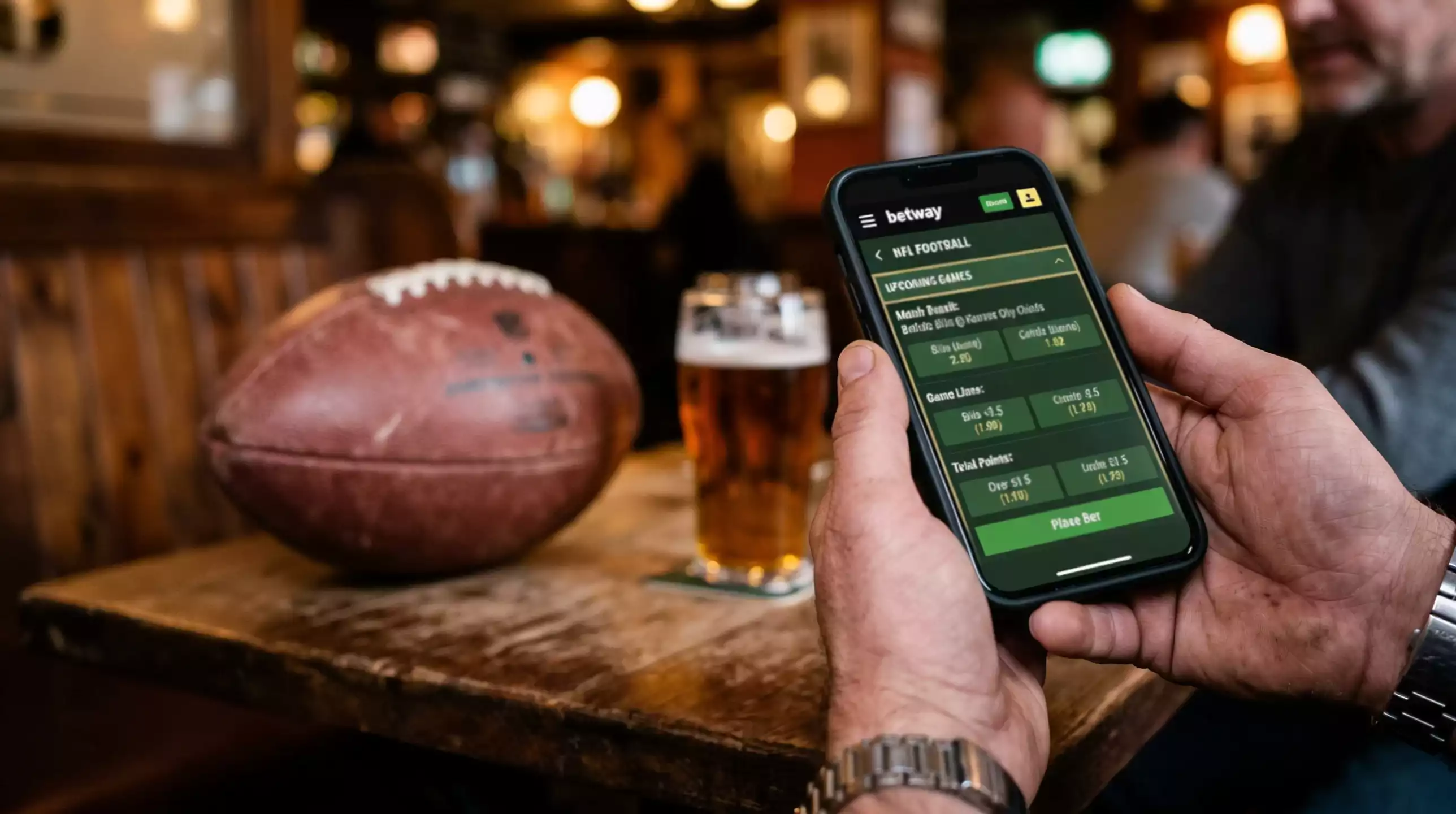
One practical tip: test your book’s live interface during a preseason game before the regular season starts. Check how quickly markets suspend and reopen after scoring plays, whether the odds display updates smoothly on your device, and how many taps it takes to place a bet from the live odds screen. These operational details determine whether you can act on the edges I’ve described in this piece or whether you’re stuck watching opportunities evaporate while your app buffers.
Five Live Betting Traps and How to Sidestep Them
Live betting magnifies every behavioural flaw a bettor has. The speed, the adrenaline, the immediate feedback loop — it’s designed to make you bet more and think less. Here are the five traps I see UK NFL bettors fall into most often, along with the fixes I’ve learned the hard way.
The first trap is chasing a pre-match loss in-play. Your pre-game bet on the Dolphins -3 is dead after they fall behind 17-0 in the first quarter, so you start looking for a live bet to “get it back.” This is tilt in its purest form. The pre-match loss is a sunk cost. Every in-play bet should be evaluated on its own merits, independent of what happened before kick-off. If the live line offers genuine value, take it. If you’re only considering it because you want to recover, close the app.
The second trap is over-betting. The constant availability of live markets makes it easy to place ten or fifteen in-play bets on a single game. Each one feels small, but the cumulative exposure adds up fast. I cap myself at two live bets per game, maximum. If neither of my two slots has triggered by the fourth quarter, I watch as a fan and save my capital for next week.
Third: betting on a game you’re not watching. Live betting without visual context is gambling on numbers. You can’t assess momentum, coaching adjustments, or weather changes from a score ticker. If you can’t watch it, don’t bet it in-play.
Fourth: ignoring the juice. Live odds carry wider margins than pre-match odds. A live spread offered at 1.83 instead of the standard 1.91 raises your breakeven rate from 52.4% to 54.6%. That’s a meaningful shift, and it means your edge needs to be proportionally larger to justify the bet. Always check the price, not just the number.
Fifth: treating cash-out as strategy. The cash-out button is the bookmaker’s friend, not yours. It’s priced to give the house an edge on the exit, just as the original bet was priced to give the house an edge on the entry. I’ve used cash-out exactly twice in nine years, both times when external circumstances (a confirmed injury to a key player mid-game) fundamentally changed my thesis. The rest of the time, I let the bet ride to settlement. If the pre-bet analysis was sound, the pre-bet analysis should determine when the bet resolves.
NFL Live Betting Questions Answered
Is live NFL betting more profitable than pre-match wagering?
Live betting can be more profitable for bettors who watch games closely and understand momentum dynamics, because in-play odds engines overreact to individual events like turnovers and scoring droughts. However, live markets also carry wider margins (higher juice), which means your edge needs to be proportionally larger. For most bettors, a mix of pre-match and selective in-play bets produces the best results.
How quickly do live NFL odds update after a turnover or touchdown?
Most UK bookmakers suspend live NFL markets for 10-30 seconds after a scoring play or turnover, then reprice based on updated win probability. The best operators resume within 3-5 seconds of the new odds being calculated; slower platforms can lag 8-10 seconds. During the suspension, no bets can be placed. After resumption, the new odds reflect the event but may not fully account for contextual factors like drive quality or coaching adjustments.
What is the best NFL live bet to place in the fourth quarter?
The highest-value fourth-quarter live bets tend to involve garbage-time distortion. When a trailing team scores a cosmetic late touchdown, the live spread tightens even though the game’s competitive outcome is essentially decided. Backing the leading team at the adjusted spread after a garbage-time score is a consistent angle. Live unders in the final minutes also offer value when a leading team shifts to clock-killing run plays that reduce scoring pace.
Because in-play markets move incredibly fast, maintaining strict NFL bankroll management is crucial to protect your funds from sudden variance.
Discover more expert tactics and live wagering advice on the leading NFL betting strategies portal tailored for UK punters.
Created by the ”nfl Betting Strategies” editorial team.