NFL Key Numbers in Spread Betting: Margins and Line Timing
 Available in US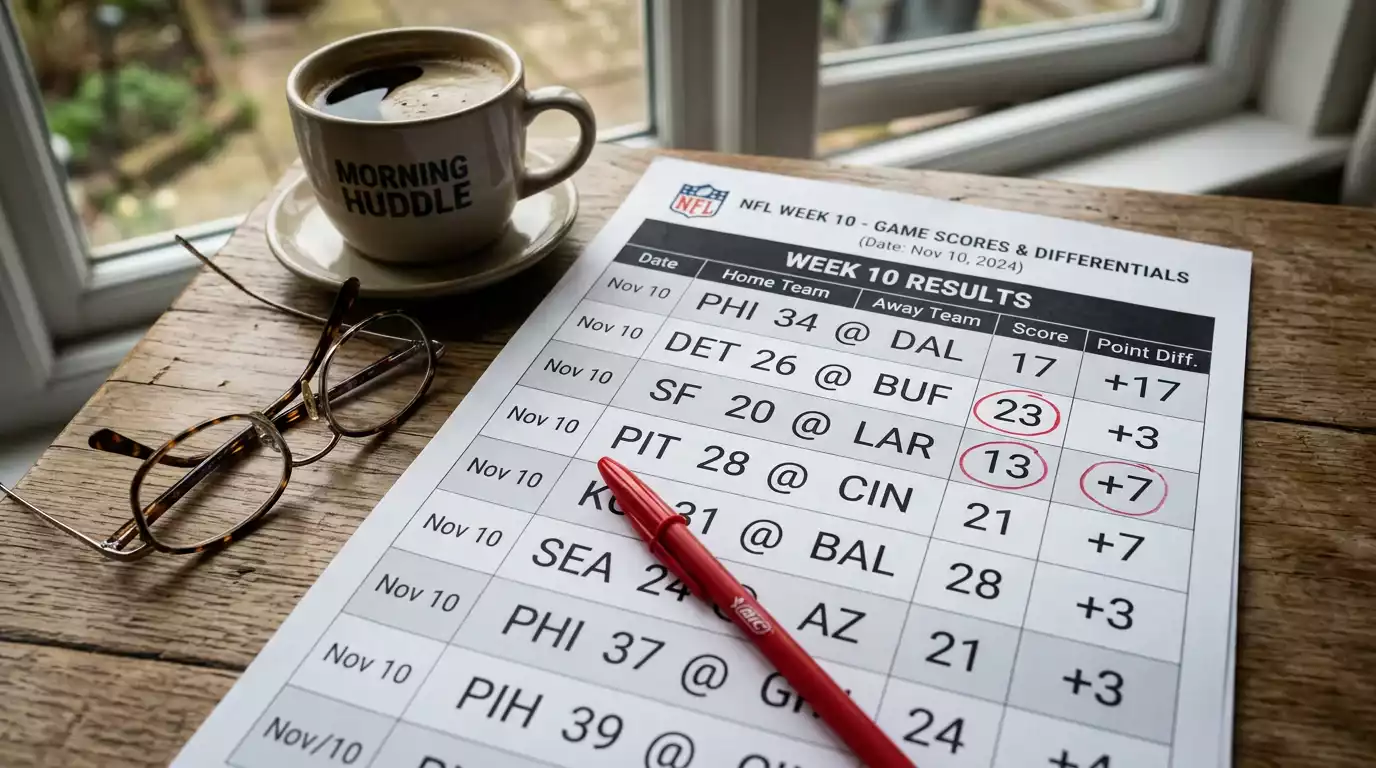
Scoring Margin Probability: Exploiting Non-Random Outcomes
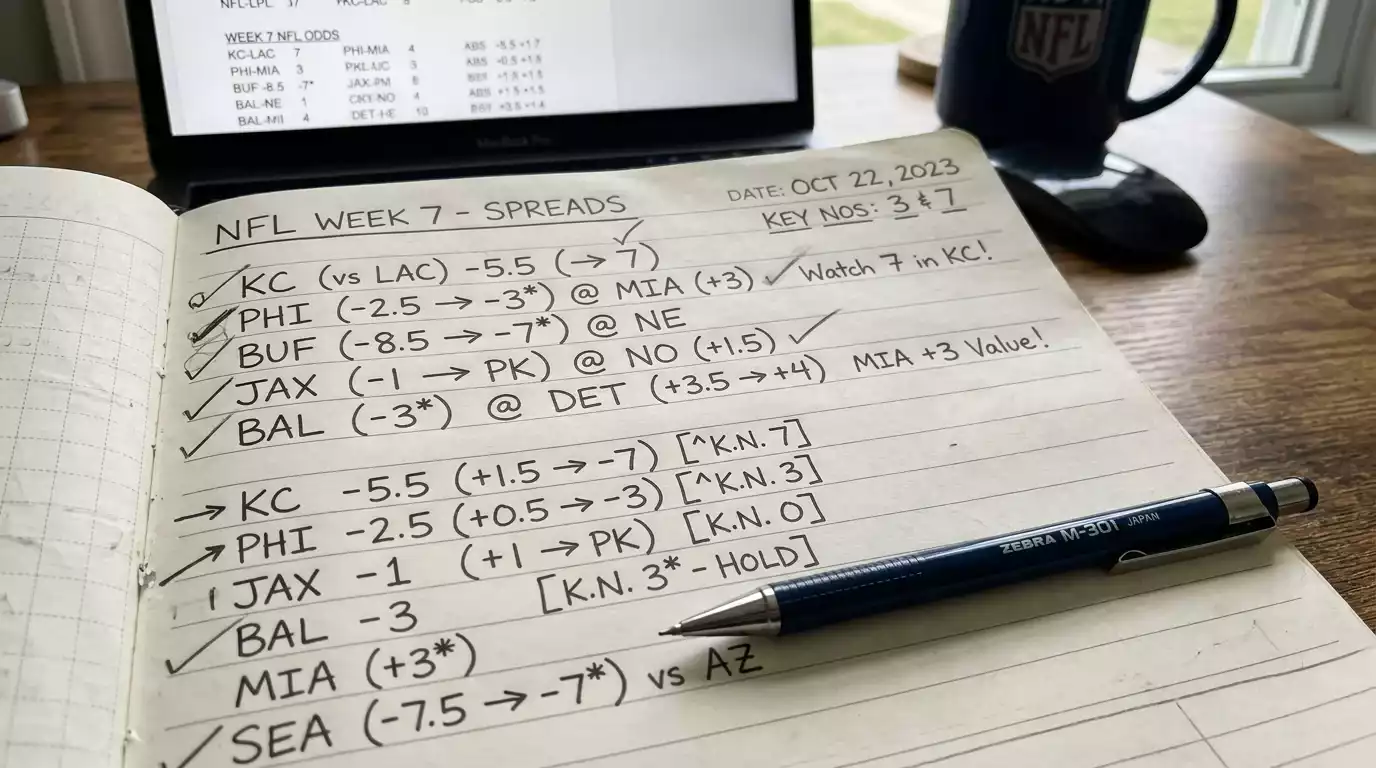
I remember the exact moment key numbers stopped being an abstract concept and became a betting weapon. It was a late November game, Chiefs at home, spread set at -3. I had them covering. They won by exactly 3. Push. That single outcome — repeated across hundreds of NFL games every season — taught me something that every UK punter needs to internalise: NFL scoring isn’t random. It clusters at specific margins, and those margins dictate the architecture of every spread line you’ll ever see.
If NFL games ended on uniformly distributed margins, buying or selling half-points on a spread would have identical value regardless of the number. But they don’t. Certain margins of victory occur far more frequently than chance would predict, because the scoring system forces specific point totals. A field goal is worth 3. A touchdown with the extra point is worth 7. The combinations of these two primary scoring plays create a non-random distribution that serious bettors exploit every single week.
Understanding key numbers doesn’t require advanced statistics or expensive software. It requires knowing which numbers matter, why they matter, and how to use that knowledge when you’re staring at a spread line on a Sunday morning at your UK bookmaker. That’s what this piece delivers.
The Margin-of-Victory Distribution: Where NFL Games Actually Land
Pull up any dataset of NFL results from the past two decades and plot the margins of victory. What you’ll see isn’t a smooth bell curve. It’s a jagged, spiky distribution with pronounced peaks at certain numbers. The 2025 season was no exception — favourites won 65.9% of games outright but covered the spread only 47.8% of the time, and that gap was shaped directly by the clustering of margins around key numbers.
The most common margin of victory in the NFL is 3 points. Roughly 14-16% of all games in a typical season end with a 3-point margin. That’s one in every six or seven games. The second most common is 7 points, which accounts for approximately 8-10% of outcomes. Together, margins of 3 and 7 explain nearly a quarter of all NFL results. No other sport has this level of concentration around specific scoring margins.
After 3 and 7, the next most frequent margins are 6, 10, 4, and 14. Notice the pattern: these are all multiples or near-multiples of 3 and 7. A 6-point margin is two field goals. A 10-point margin is a touchdown-plus-field-goal. A 14-point margin is two touchdowns. The scoring structure of the game creates a predictable fingerprint in the data, and that fingerprint has remained remarkably stable across eras, rule changes, and offensive explosions.
What’s less intuitive is where the troughs fall. Margins of 5 and 9 are notably uncommon. A 5-point lead requires a specific and relatively unlikely combination of scoring events. This means that a spread of -5 behaves very differently from a spread of -3 or -7 — the probability of landing exactly on 5 is low, so the risk of a push is minimal and the half-point you’d buy to move from 5 to 4.5 has less protective value than moving from 3 to 2.5.
The Power of 3 and 7: Field Goals and Touchdowns in the Data
Three points. One field goal. It’s the smallest common lead change in football, and it happens constantly — after failed red zone drives, during conservative late-game clock management, on the final play of the first half. Because field goals are both frequent and relatively low-variance (kickers convert at high rates inside 45 yards), a 3-point margin of victory is essentially the default tight-game outcome.
When you see a spread set at -3 at your UK bookmaker, you’re looking at the single most consequential number in NFL betting. Every half-point movement through 3 changes the expected value of the bet more than equivalent movement at any other number. Moving from -3 to -2.5 eliminates the push scenario on the most common margin in the sport. Moving from -3 to -3.5 means you now lose on the most common margin instead of pushing. These aren’t minor adjustments. They can shift the expected value of a bet by 3-5%, which is enormous in a market where edges are measured in tenths of a percentage point.
Seven follows the same logic but at the touchdown scale. A 7-point margin means one team scored exactly one more touchdown (with conversion) than the other. This happens most often in games where a late scoring drive creates a two-possession lead or when a team holds on after a fourth-quarter touchdown. The -7 spread is the second most important line in NFL betting, and the same half-point dynamics apply. Moving through 7 in either direction carries disproportionate value.
Here’s what I tell every bettor I work with: if you’re betting a spread and the line is within 1 point of 3 or 7, slow down. Think about which side of that key number you want to be on. Consider whether paying for a half-point is worth the juice. This single habit will improve your long-term results more than any other adjustment.
Secondary Key Numbers: 6, 10 and 14
Beyond the twin pillars of 3 and 7, three secondary key numbers deserve your attention: 6, 10, and 14. They don’t carry the same weight — you won’t find as many games landing on these margins — but they appear often enough to influence line evaluation.
Six represents two field goals, or a touchdown without the extra point (rare in the modern game but not extinct). In the 2025 season, the Kansas City Chiefs posted one of the league’s worst ATS records, failing to cover in 10 games. Several of those non-covers came in games decided by exactly 6 or 7 points, where their defence held but their offence couldn’t generate the final scoring push. If you’d been aware of the 6-7 cluster and adjusted your approach to Chiefs spreads in that range, you’d have saved real money.
Ten is a touchdown-plus-field-goal margin. It’s the third most common double-digit margin and marks the boundary between “competitive game” and “comfortable win” in most bettors’ minds. Spreads around -10 or -10.5 benefit from the same half-point logic as 3 and 7, though the frequency of exactly 10-point margins is lower — roughly 4-5% of games.
Fourteen is two touchdowns. It’s the most common blowout margin and the point at which garbage-time scoring dynamics take over. When a team trails by 14 in the fourth quarter, the defensive scheme softens, the losing team shifts to a hurry-up passing attack, and late touchdowns become more likely. This makes -13.5 and -14.5 spreads particularly volatile. I avoid large spreads in general, but when I do engage with them, I pay close attention to whether the line sits on the correct side of 14.
Practical Application: Buying and Selling Through Key Numbers
Theory is only useful if it translates into better decisions. Here’s how I apply key number knowledge to my actual betting process, week by week.
When the spread sits at -3 and I like the favourite, I look at the cost of buying to -2.5. At most UK bookmakers, buying a half-point moves the price from roughly 1.91 to about 1.80-1.83. That’s significant juice. But given that approximately 15% of games end with a 3-point margin, eliminating the push scenario on the most common outcome is worth the cost. I buy through 3 on favourites more often than any other number.
When I like an underdog at +2.5, the calculus reverses. Moving to +3 to capture the push on a 3-point favourite win is almost always worth the juice. You’re adding the most likely push outcome to your winning scenarios. The Seattle Seahawks’ 12-5 ATS record in 2025 included several games where they sat at +3 and the margin landed exactly there — a push for those who had +3, a loss for those who’d sold down to +2.5.
For spreads around 7, the same principles apply but with slightly less force. The frequency of exactly 7-point margins is lower than 3-point margins, so the value of buying through 7 is roughly 60-70% of the value of buying through 3. I’ll still do it, but I’m more price-sensitive about the juice.
For spreads at non-key numbers — 4, 5, 8, 9 — buying half-points is rarely worth the cost. The probability of landing on those exact margins is low enough that the juice eats up any protective value. Save your money for the numbers that actually matter.
One final application: line movement through key numbers is a strong signal. If a line opens at -2.5 and moves to -3.5, it has crossed the most important number in NFL betting. That movement tells you that sharp money pushed it through 3, which is expensive for books and only happens when substantial, informed action comes in on the favourite side. Conversely, movement from -3.5 back down to -3 or -2.5 signals sharp money on the underdog. Track these movements and you’ll start seeing the market’s hidden opinion on every game.
What percentage of NFL games are decided by exactly 3 points?
Approximately 14-16% of NFL games in a typical season finish with a 3-point margin of victory. This makes 3 the single most common margin in the sport, driven by the prevalence of field goals as a scoring method. Because of this concentration, spreads set at or near -3 are the most consequential lines in NFL betting, and buying or selling half-points through 3 carries more value than at any other number.
Is it worth paying extra juice to move a spread off a key number?
Yes, when the key number is 3 or 7. Moving from -3 to -2.5 on a favourite, or from +2.5 to +3 on an underdog, eliminates or adds the push scenario on the most common margin of victory. The probability mass at these numbers is high enough to justify the additional cost. For non-key numbers like 4, 5, 8, or 9, buying half-points is rarely worthwhile because far fewer games land on those exact margins.
Published by the nfl Betting Strategies team.