NFL Weather Impact on Betting: Calculating Environmental Variables
 Available in US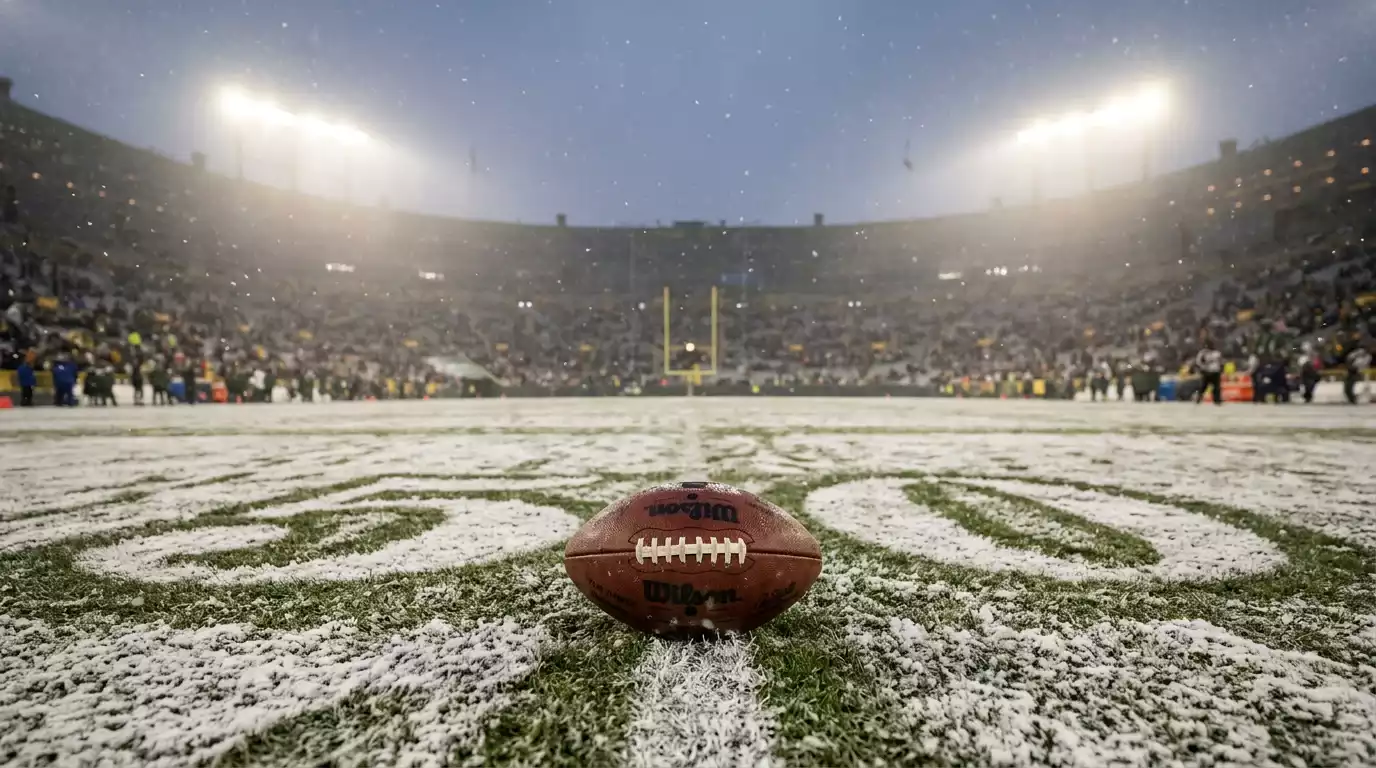
Table of Contents
Environmental Adjustments: Exploiting Underpriced Weather Variables
I keep a weather app pinned to my home screen that has nothing to do with whether I need an umbrella in London. It shows hourly forecasts for every outdoor NFL stadium in America. That app has been one of my most profitable tools, and I’m not joking. Bookmakers adjust for weather, but they consistently under-adjust — particularly for wind and cold — because their models are calibrated to average conditions and updated late. By the time the bookmaker moves the total down 1.5 points for a wind advisory, I’ve already taken the under at the pre-adjustment number. That gap between my reaction and the market’s reaction is pure value.
Weather matters in the NFL because the game is played outdoors at 22 of 32 venues. Wind disrupts the passing game. Rain increases turnovers. Cold suppresses offensive efficiency. Snow creates chaos. Each condition has a measurable effect on scoring, and each one is systematically underweighted in the betting market.
Wind Thresholds: When Passing Games Break Down
Wind is the single most impactful weather variable for NFL totals betting, and it operates with clear thresholds rather than a linear relationship. Below 10 mph, wind has virtually no effect on professional quarterbacks. Between 10 and 15 mph, deep passing accuracy begins to decline, but short and intermediate routes remain reliable. Above 15 mph is where the data gets interesting.
At sustained winds above 15 mph, passing efficiency drops measurably. Completion rates on throws of 20+ air yards decline by roughly 10-15 percentage points compared to calm conditions. Field goal accuracy falls, particularly from 45+ yards. Punt coverage becomes unpredictable, creating field position variance that can swing scoring in either direction but more often suppresses it.
Above 20 mph, the effect becomes dramatic. Games played in sustained winds exceeding 20 mph average 4-6 fewer total points than the same teams would produce in calm conditions. The passing game becomes functionally unreliable for deep and intermediate routes, forcing both teams into run-heavy schemes that consume clock and produce fewer points per possession. If the posted total hasn’t dropped by at least 2-3 points to account for 20+ mph winds, the under is almost certainly underpriced.
One nuance: wind direction matters as much as speed. Crosswinds are more disruptive than headwinds or tailwinds because quarterbacks can’t adjust their throwing arc to compensate. A 15 mph crosswind at a stadium with an open end (like Buffalo’s Highmark Stadium) has a larger effect than a 15 mph headwind at a more enclosed venue. Check not just wind speed but wind direction relative to the stadium orientation. It takes an extra 30 seconds of research and it’s worth every one of them.
Rain and Snow: Fumble Rates, Run-Game Boosts and Totals Drops
Rain’s primary effect isn’t on passing accuracy — modern NFL footballs and quarterback gloves are engineered to handle wet conditions. The primary effect is on ball security. Fumble rates increase measurably in rain games, creating unpredictable scoring swings from turnovers. A defensive fumble recovery returned for a touchdown boosts the total; a fumble that kills a promising drive suppresses it. The net effect on totals is moderately downward, but the variance is higher than in dry conditions.
Heavy rain (sustained downpour throughout the game) has a more pronounced effect. Running backs gain an advantage because wet conditions favour north-south running over lateral movement by defenders. Passing games shift toward short, quick throws. The overall pace of scoring slows because run-heavy drives consume more clock. I adjust my totals projection downward by 2-3 points for heavy rain games and treat the under as favoured.
Snow creates the most visually dramatic weather conditions but has a more variable effect than wind or cold. Light snow rarely affects play significantly. Heavy snow can suppress scoring dramatically — footing becomes treacherous, the ball becomes slippery, and field goal attempts become adventures. But snow games also produce wildly unpredictable outcomes (think of the famous “Snow Bowl” games) that make them risky for totals betting in either direction. I approach snow games cautiously and reduce my standard stake by half.
Sub-Zero Games: How Temperature Affects Warm-Weather Teams
Jason Ziernicki, founder of Cleatz, observed that what happened to home-field advantage over 30 years can only be described as transformational — but specific stadiums maintained significantly stronger advantages because of environmental factors still at play. Temperature is the most powerful of those environmental factors. Six stadiums maintained home win rates above 65% between 2020 and 2024, and several of them — Kansas City, Buffalo, Green Bay — are outdoor cold-weather venues where December and January games regularly dip below freezing.
Cold affects the human body in ways that training can mitigate but not eliminate. Grip strength decreases. Muscle elasticity drops, increasing injury risk on explosive movements. Reaction time slows marginally. For teams that play in cold weather every week, these effects are normalised — their bodies and their schemes are adapted. For dome teams or warm-weather teams visiting cold-weather venues in December, the adjustment is real and measurable.
The data supports a specific angle: when a dome team (Arizona, Las Vegas, Atlanta, for example) travels to an outdoor cold-weather venue where the game-time temperature is forecast below 0 degrees Celsius, the visiting team’s offensive efficiency drops by a larger margin than standard road-game averages would predict. Home-field advantage has declined to roughly 53% across the league in the 2020s — a 62% decline from the 1990s — but in cold-weather games involving a dome team visitor, the home team’s advantage remains closer to historical norms.
For totals, sub-zero games involving a warm-weather visitor are strong under candidates. The visiting team’s passing game suffers, their kicking game becomes less reliable, and the overall pace of play slows. Combined with wind (cold-weather venues are often windy), the suppressive effect on scoring compounds.
Dome Teams Travelling Outdoors: A Persistent Betting Angle
This is one of the most reliable situational angles in my entire NFL betting playbook. When a team that plays its home games in a climate-controlled dome travels to an outdoor venue in November, December, or January, the total is almost always worth a close look on the under side.
The logic extends beyond just temperature. Dome teams design their offences around controlled conditions — consistent wind (none), consistent footing (perfect turf), consistent temperature (72 degrees year-round). Their offensive scheme optimises for those conditions, emphasising downfield passing, precise route-running, and timing-based plays that depend on predictable ball flight. Move those same schemes outdoors into wind, rain, or cold, and the precision degrades. Routes slip. Throws sail. Timing breaks.
The totals market accounts for this to some degree — bookmakers aren’t blind to the dome-to-outdoor dynamic. But the adjustment is typically conservative: 1-2 points off the total. My own modelling suggests the true impact is closer to 2.5-4 points in games with adverse conditions (wind 15+ mph or temperature below 5 degrees Celsius), which means the under retains value even after the bookmaker’s adjustment.
The reverse — outdoor teams visiting dome venues — also creates a totals angle, but in the opposite direction. Teams accustomed to dealing with weather suddenly get perfect conditions, and their offensive output often exceeds their season average. The over on these games has value when the posted total is anchored to the visiting team’s weather-depressed scoring numbers rather than their talent-adjusted baseline.
Weather betting isn’t glamorous. It won’t make you the sharpest analyst in the room at the pre-game discussion. But it’s one of the few areas in NFL betting where publicly available information — a weather forecast that anyone can check — consistently provides an edge because the market’s adjustment mechanism lags behind reality. Check the forecast. Check the venue. Adjust your numbers before the bookmaker adjusts theirs. That’s the entire system, and it works.
At what wind speed do NFL passing games become unreliable?
Sustained winds above 15 mph begin to measurably reduce deep passing accuracy, with completion rates on 20+ air yard throws declining by roughly 10-15 percentage points compared to calm conditions. Above 20 mph, the passing game becomes functionally unreliable for intermediate and deep routes, forcing run-heavy schemes that suppress total scoring by 4-6 points on average. Wind direction also matters — crosswinds are more disruptive than headwinds or tailwinds.
Do dome teams perform worse when playing outdoors in cold weather?
Yes, measurably. Dome teams travelling to outdoor cold-weather venues in November through January show larger drops in offensive efficiency than standard road-game averages predict. Their schemes are optimised for controlled conditions — no wind, perfect footing, consistent temperature — and the precision required for those schemes degrades in adverse weather. This makes the under on game totals a structurally attractive angle when dome teams face outdoor cold-weather opponents, particularly when wind or sub-zero temperatures are forecast.
Written by the editors at nfl Betting Strategies.