NFL Playoff Betting Strategy: Exploiting Postseason Market Adjustments
 Available in US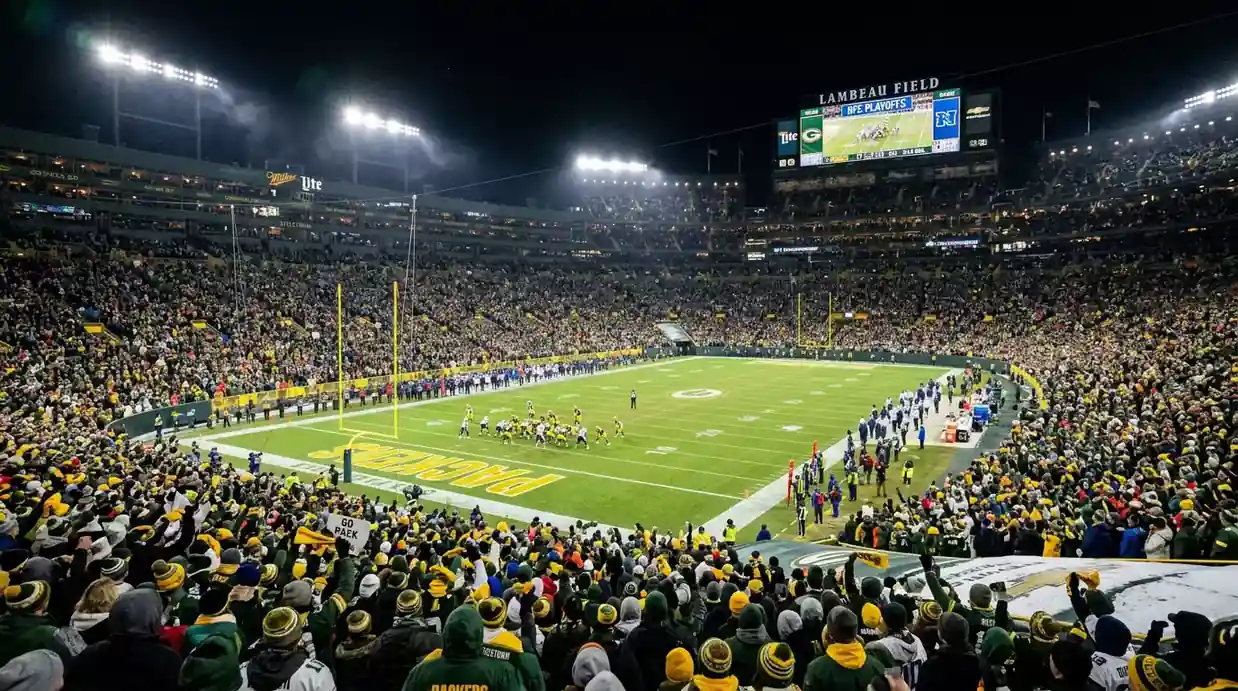
Table of Contents
- Postseason Wagering Adjustments: Analyzing Tighter Playoff Lines
- Wild Card Round: Public Overreaction and Seed Bias
- Divisional Round: Tighter Lines and Home-Field Adjustments
- Conference Championships: When Coaching and Rest Matter Most
- Super Bowl Betting: Line Inflation, Prop Volume and UK Engagement
- Postseason Bankroll Considerations
Postseason Wagering Adjustments: Analyzing Tighter Playoff Lines
Everything you learn about NFL betting during the regular season remains relevant in the postseason — but the weighting changes. Home-field advantage, which has declined substantially during the regular season, regains some of its potency in the playoffs because the teams that earn home games are genuinely better rather than benefiting from scheduling luck. Coaching adjustments, which matter throughout the season, become decisive when both teams have two weeks to prepare for each other. Public betting patterns, which distort regular-season lines, intensify during the playoffs because casual bettors flood the market with money they’ve been saving for the biggest games.
During the 2025 regular season, favourites won 65.9% of games outright but covered the spread in only 47.8% of cases. That gap between outright win rate and ATS performance is the clearest indicator that the market overvalues favourites — and the tendency amplifies in the postseason, when the public gravitates even more strongly toward the better-known, higher-seeded team. If you approach playoff betting with the same framework you use in October, you’ll miss the structural differences that create postseason-specific edges.
Wild Card Round: Public Overreaction and Seed Bias
The Wild Card round pits division winners against wild-card qualifiers, and the market’s primary bias is seed-based. Higher seeds are home favourites, and the public backs them heavily because the narrative — “they earned the better seed, they deserve to be favoured” — aligns with how casual bettors think about playoff football. But seeding reflects regular-season performance, and regular-season performance is a noisy predictor of single-game playoff outcomes.
Wild Card underdogs have historically covered the spread at rates slightly above 50%, which means the market’s favourite bias gives away value to contrarian bettors willing to take the points. The expanded playoff format (seven teams per conference since 2020) has amplified this by adding a seventh seed that is often a streaking team entering the playoffs with momentum that its seeding doesn’t reflect. A seventh seed that won six of its final eight regular-season games is a more dangerous opponent than its positioning suggests, and the spread doesn’t always account for late-season trajectory.
The practical angle: in the Wild Card round, focus on underdogs with strong late-season form and a defensive identity. Defence travels in the playoffs — the aphorism exists because defensive schemes are less dependent on crowd noise and home-field factors than offensive rhythm. A wild-card team with a top-ten defence is a more credible upset candidate than a wild-card team that relies on a high-powered offence, which may struggle against a playoff-calibre defence it hasn’t faced before.
Divisional Round: Tighter Lines and Home-Field Adjustments
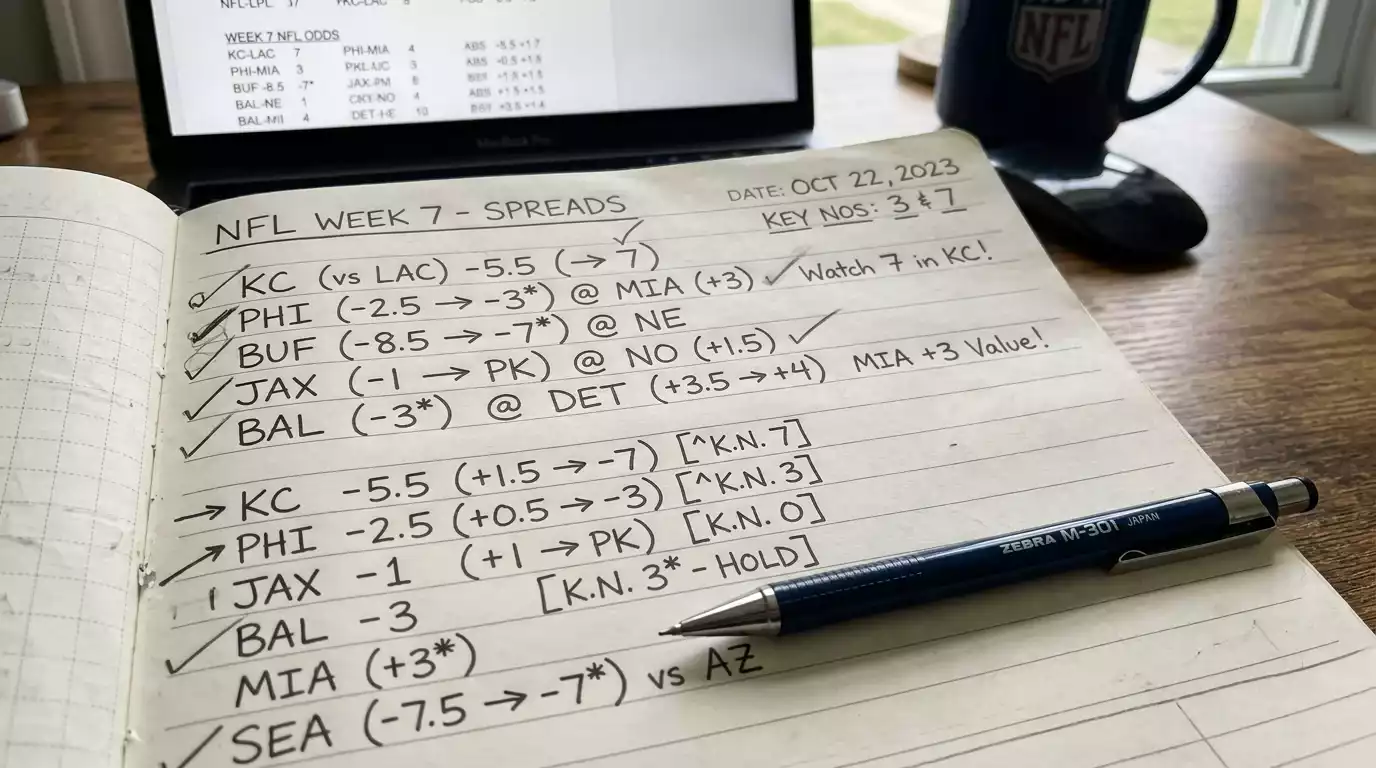
The Divisional Round is where the quality gap narrows and the betting market sharpens. The remaining teams are all legitimate contenders, and the spreads are typically tighter — three points or fewer in most matchups. Tight spreads mean key numbers (3 and 7) become even more critical than during the regular season. A half-point in the Divisional Round can be the difference between covering and pushing.
Home-field advantage in the Divisional Round is more meaningful than during the regular season because the host is always the higher seed, which means it’s genuinely the better team (or at least the team with the better regular-season record). Six stadiums maintained home win rates above 65% during the 2020-2024 period: Kansas City and Buffalo at 78.9%, San Francisco at 73.3%, New Orleans at 68.9%, Baltimore at 68.4%, and Minnesota at 65.5%. In the Divisional Round, these venues become fortress-level advantages because the crowd is at peak intensity and the opposing team is dealing with travel, weather, and a hostile environment simultaneously.
The betting edge in the Divisional Round comes from identifying which home advantages are real and which are artefacts of regular-season scheduling. A team that went 8-1 at home during the regular season but played a weak home schedule may be overvalued as a Divisional Round host. A team that went 6-3 at home but faced three top-ten opponents in those home losses may be undervalued. Context matters more than raw home-away splits.
Conference Championships: When Coaching and Rest Matter Most
Conference Championship games feature the best coaching staffs in the league, and the preparation dynamic is unique. Both teams have had a week off (the top seeds had a bye in the Wild Card round), and both have been watching film of their opponent for as long as possible. Scheme familiarity is at its peak. Surprise is at its minimum. The game often comes down to in-game adjustments — which coaching staff reads the opponent’s approach faster and adapts more effectively.
For bettors, the Conference Championship is the round where coaching matchup analysis has the highest predictive value. Review each coaching staff’s in-game adjustment record. How do they perform when trailing at halftime in high-leverage games? Do they abandon their game plan or stick to it? Do they make halftime adjustments that produce second-half scoring surges? The answers to these questions often determine the outcome of games where the talent is evenly matched and the spread is tight.
Totals in Conference Championship games tend to go under more often than regular-season games. The reason is defensive intensity: both teams are playing elite defence, the stakes suppress risk-taking, and coaches are more conservative with play-calling because a single turnover can end the season. If you’re betting Conference Championship totals, the under has a slight structural lean — but verify by checking whether both teams’ defensive schemes are geared toward generating turnovers (which creates variance and can push scores in either direction) or limiting big plays (which suppresses scoring more consistently).
Super Bowl Betting: Line Inflation, Prop Volume and UK Engagement
The Super Bowl is the most heavily bet single sporting event in the world, and the betting dynamics are unlike any other game on the calendar. The two-week gap between the Conference Championships and the Super Bowl creates a unique line-movement pattern: the opening line reflects sharp money, the midweek lines absorb public money, and the closing line often moves back toward the opener as sharp bettors take the other side of public positions.
For UK punters, the Super Bowl is often the gateway to NFL betting. The game kicks off on a Sunday evening UK time, the cultural saturation is massive, and UK bookmakers offer an extraordinary range of markets — from standard spreads and totals to novelty props on the coin toss, the national anthem length, and the colour of the Gatorade shower. The volume of prop markets creates opportunities because bookmakers are pricing hundreds of props simultaneously, and the less liquid ones (player-specific touchdown scorers, exact score, quarter-by-quarter results) tend to have softer lines than the main spread and total.
The spread itself is often the least interesting Super Bowl bet. Because the market has two weeks to digest information, the closing spread is typically razor-sharp and difficult to beat. The value migrates to the edges — player props, first-half lines, live betting, and alternative spreads. If you’ve spent the season developing your live betting skills, the Super Bowl is where they pay off. The in-game market for the Super Bowl is deeper than any other NFL game, with more prop options updating in real time and more bookmakers competing for your live action.
One Super Bowl-specific pattern: underdogs have covered the spread more often than not over the past two decades. The public overwhelmingly backs the favourite in the Super Bowl, and that one-sided public money inflates the favourite’s spread by half a point to a full point beyond what the talent gap justifies. If you can stomach taking the points on a Super Bowl underdog while everyone around you is backing the favourite, the historical data supports the contrarian play.
Postseason Bankroll Considerations
Playoff betting presents a bankroll paradox. The games feel more important, which tempts bettors to increase their stakes. But the sample size is tiny — fourteen games total across four rounds, with only one game in the Super Bowl. Increasing your unit size for the playoffs is the opposite of sound bankroll management. You should maintain your regular-season unit size or, if anything, reduce it slightly to account for the heightened uncertainty of single-elimination games where one turnover or one penalty can negate every edge your analysis identified.
The emotional intensity of playoff betting also makes discipline harder to maintain. A bad beat in the Wild Card round — a backdoor cover by the opposing team, a last-second field goal that swings the spread — can trigger tilt that affects your Conference Championship bets a week later. Build in a cooling-off period between playoff rounds. Review your Wild Card bets calmly before the Divisional Round opens. If your process was sound and the result was variance, stay the course. If your analysis missed something, adjust the process, not the stake size.
Are NFL playoff underdogs more or less likely to cover the spread than regular-season underdogs?
Playoff underdogs have historically covered the spread at rates slightly above 50%, similar to or marginally better than regular-season underdogs. The effect is most pronounced in the Wild Card round and the Super Bowl, where public betting heavily favours the higher seed or the favourite, inflating the spread and creating value on the underdog side. Divisional and Conference Championship rounds produce tighter lines with less consistent underdog edges.
How does Super Bowl line movement differ from regular-season games?
The two-week preparation window creates a distinctive pattern: the opening line reflects sharp money, midweek movement absorbs public money (almost always in the favourite’s direction), and the closing line often moves back toward the opener as sharps take the opposite side. The extended timeframe also means more information enters the market (injury updates, media narratives, prop betting data), which makes the closing Super Bowl spread one of the most efficient lines on the NFL calendar.
Published by the nfl Betting Strategies team.