NFL Line Movement Analysis: Tracking Odds Shifts and Steam Moves
 Available in US
Betting Line Volatility: Timing Wagers During Market Shifts
Most bettors look at a spread and see a number. I look at a spread and see a story. The line at any given moment is the market’s current best estimate of fair value, shaped by every piece of information and every pound wagered since it opened. CLV-positive bettors — those who consistently get better prices than the closing line — demonstrate ROI two to three times higher than those who don’t track line movement at all. That’s because line movement is information, and information is the currency of profitable betting.
Reading line movement isn’t about predicting which way the number will go next. It’s about understanding why it moved, what the movement tells you about where the smart money sits, and whether the current price still offers value. Every NFL spread has a birth, a life, and a death (at kickoff). Learning to read its biography makes you a better bettor.
How NFL Opening Lines Are Set and Where They First Appear
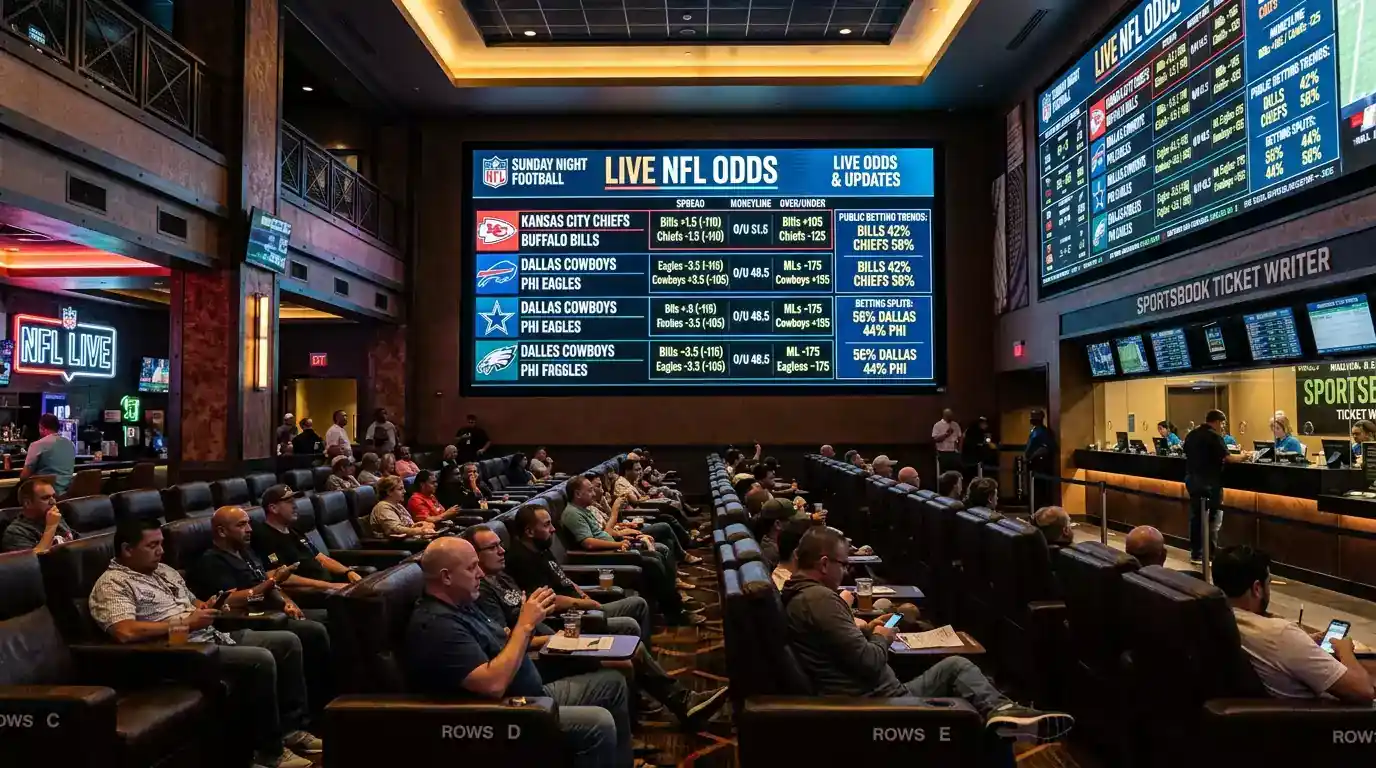
NFL opening lines for the following week’s games typically appear on Sunday evening, shortly after the current week’s games conclude. These “look-ahead” lines are set by a small group of experienced oddsmakers using power ratings, home-field adjustments, and schedule factors. They’re deliberately rough — the oddsmakers know the lines will move significantly before kickoff.
The first movers in the market are sharp bettors who have pre-computed their own power ratings and are waiting for the lines to post. Within minutes of the opening line appearing, sharp money starts testing it. If the opening line is Bills -3 and three different sharp betting groups immediately bet Bills at -3, the line jumps to -3.5 or -4 within the first hour. That initial movement is the purest signal of sharp opinion because it occurs before any public money, any media narrative, and any midweek injury report has entered the market.
For UK punters, the timing is important. Opening lines post late Sunday evening UK time — typically between 10 PM and midnight. If you’re serious about capturing value, this is the window to watch. By Monday morning, the sharpest money has already moved the line, and the prices you see are second-generation, not opening prices. I don’t always bet Sunday night, but I always check the openers and compare them to my own numbers before the market moves.
What Moves NFL Lines: Money, News, Injuries and Weather
Four forces drive NFL line movement, and distinguishing between them is essential for interpreting what a move means.
Sharp money moves lines early and decisively. A single large wager from a known sharp bettor or syndicate can shift a line by half a point to a full point. These moves typically happen Sunday night through Tuesday. The traditional “three points” that bookmakers assigned as home-field advantage has shrunk to approximately 1.5 points in modern NFL line-setting, so even modest sharp action can push a line across that threshold.
Public money moves lines gradually and predictably. Recreational bettors tend to back favourites, overs, and primetime teams. Their collective action pushes lines in predictable directions, usually from Thursday through Sunday morning. Public-driven movement is the most exploitable because it often pushes lines beyond fair value in the direction of popular opinion.
Injury news creates the sharpest individual-bet line movements. When a starting quarterback is ruled out, the spread can shift 3-7 points depending on the quality gap between the starter and the backup. These moves happen whenever the news breaks — sometimes Wednesday practice reports, sometimes Friday afternoon designations, sometimes Sunday morning inactive lists. The speed of your reaction to injury news determines whether you capture value or chase a price that’s already moved.
Weather adjustments happen late — typically Saturday or Sunday — when forecasts become reliable enough for bookmakers to incorporate. High-wind forecasts suppress totals. Rain forecasts have a more modest effect. Extreme cold in outdoor stadiums can move both the total and the spread if one team is a dome team travelling to a cold-weather venue. Weather moves are the smallest of the four forces but the most underpriced, because bookmakers apply conservative adjustments that don’t fully reflect the data.
Steam Moves vs. Reverse Line Movement: Telling Them Apart
Two terms dominate line movement vocabulary: steam moves and reverse line movement. They describe different phenomena, and confusing them leads to bad decisions.
A steam move is a rapid, simultaneous line shift across multiple bookmakers. It happens when a syndicate or group of connected sharps places large bets at several platforms within seconds, capturing the current price before it adjusts. The line moves fast — sometimes a full point in under a minute. Steam moves are informational: they tell you that organised, well-funded bettors have taken a position. But they’re not directly exploitable because the price has already moved by the time you see it. Steam moves are useful as confirmation, not as trade signals.
Reverse line movement is slower and subtler. It occurs when the line moves in the opposite direction from what public betting percentages would predict. If 70% of bets are on the Cowboys at -6 but the line drops to -5.5, the bookmaker is responding to sharp money on the other side. Reverse movement is more actionable than steam because it develops over hours or days, giving you time to evaluate and respond. I track reverse movements from public betting splits data and use them as a primary input in my handicapping process.
The distinction matters because steam moves can create false reverse line movement signals. If a steam move pushes a line from -3 to -4 early in the week, and then public money on the other side gradually pushes it back to -3.5, that’s not true reverse movement — it’s a steam correction followed by public re-balancing. True reverse movement occurs when the public is steadily backing one side and the line moves against them without a preceding steam event. That’s the real signal.
When to Bet: Early, Midweek or Just Before Kickoff?
Timing is the most underrated dimension of NFL betting. The same side at two different prices is two different bets with two different expected values. Getting the timing right is the simplest way to improve your CLV without changing anything about your handicapping process.
Early bets (Sunday night through Tuesday) capture the softest lines — those that haven’t yet absorbed a full week of information flow. If your handicapping doesn’t depend on midweek injury reports or weather forecasts, early betting maximises your CLV. The downside is that you’re committing to a position before all information is available. Injuries, suspensions, and practice report designations can shift lines dramatically, and an early bet can’t adjust for what you didn’t know at placement.
Midweek bets (Wednesday through Friday) incorporate injury reports and practice designations. This is the sweet spot for bettors who factor injury news into their analysis. The lines are more informed than opening numbers but haven’t yet absorbed the bulk of public money that arrives on Saturday and Sunday. If you’re going to bet once per game, midweek — after the first full injury report on Wednesday — is where I’d put you.
Late bets (Saturday and Sunday morning) give you the most complete information picture: final injury designations, weather forecasts, and inactive lists. But the lines are sharpest at this point. Public money has pushed popular sides, and bookmakers have adjusted for every available input. The closing line is the most efficient price in the market. Beating it consistently from this position requires an edge that most bettors don’t have.
My personal approach: I place roughly 60% of my bets midweek (Wednesday-Thursday), 25% early (Sunday night-Tuesday), and 15% late (Saturday-Sunday). That distribution balances information completeness against price softness. Your optimal timing depends on where your edge lives — if you’re great at reading opening lines, bet early. If your edge is in processing injury reports, bet midweek. Match your timing to your skill set.
What causes the biggest NFL line movements during the week?
Quarterback injury news produces the largest individual-game movements, often shifting spreads by 3-7 points. After that, sharp money on Sunday night and Monday (the opening window) causes the earliest and most significant broad movements. Public money creates gradual, predictable shifts from Thursday through Sunday morning. Weather forecast updates on Saturday can move totals by 1-3 points for outdoor games with extreme conditions.
Should I always bet early in the week to capture the best NFL line?
Not always. Early lines are softer but lack midweek injury and weather information. The optimal timing depends on your edge. If your handicapping doesn’t rely on injury reports, early betting (Sunday night through Tuesday) maximises closing line value. If you incorporate injury analysis, midweek (Wednesday through Thursday) is the sweet spot — lines are more informed than openers but haven’t absorbed the bulk of public money. Roughly 60% of my bets are placed midweek for this reason.
Tracking these market shifts allows you to consistently secure NFL closing line value, which is the ultimate indicator of a sharp bettor.
Elevate your handicapping skills by following the premier data-driven NFL betting guide throughout the regular season.
Created by the ”nfl Betting Strategies” editorial team.