NFL Divisional Betting Trends: Spread Margins in Rivalry Matchups
 Available in US
Table of Contents
- Rivalry Matchup Metrics: Adjusting Spreads for Divisional Familiarity
- Why Division Rivals Produce Closer Games and Lower Totals
- ATS Patterns in Divisional Matchups: Underdogs and Second Meetings
- Coaching Familiarity and Scheme Adjustments in Rematches
- Divisions With the Strongest Betting Trends Right Now
Rivalry Matchup Metrics: Adjusting Spreads for Divisional Familiarity
There’s a game I replay in my head every time divisional week comes around. Week 15, 2023 — a division leader at home, favoured by 10 against a last-place rival. Every metric screamed blowout. I took the favourite to cover. The final margin? Three points. The underdog’s defensive coordinator had spent two weeks installing a scheme specifically designed to neutralise the opponent’s top weapon — something you can only do when you’ve already played that offence twice in twelve months and have hours of film to dissect. Divisional games compress talent gaps, and the spread market doesn’t always account for it.
In the 2025 season, favourites covered the spread in just 47.8% of games overall. In divisional matchups, the cover rate for favourites was even lower. The sample sizes within any single division are small — each team plays six divisional games per season — but the pattern holds across the league and across years: divisional games produce tighter margins, more upsets, and more ATS value on the underdog side than non-divisional matchups.
Why Division Rivals Produce Closer Games and Lower Totals
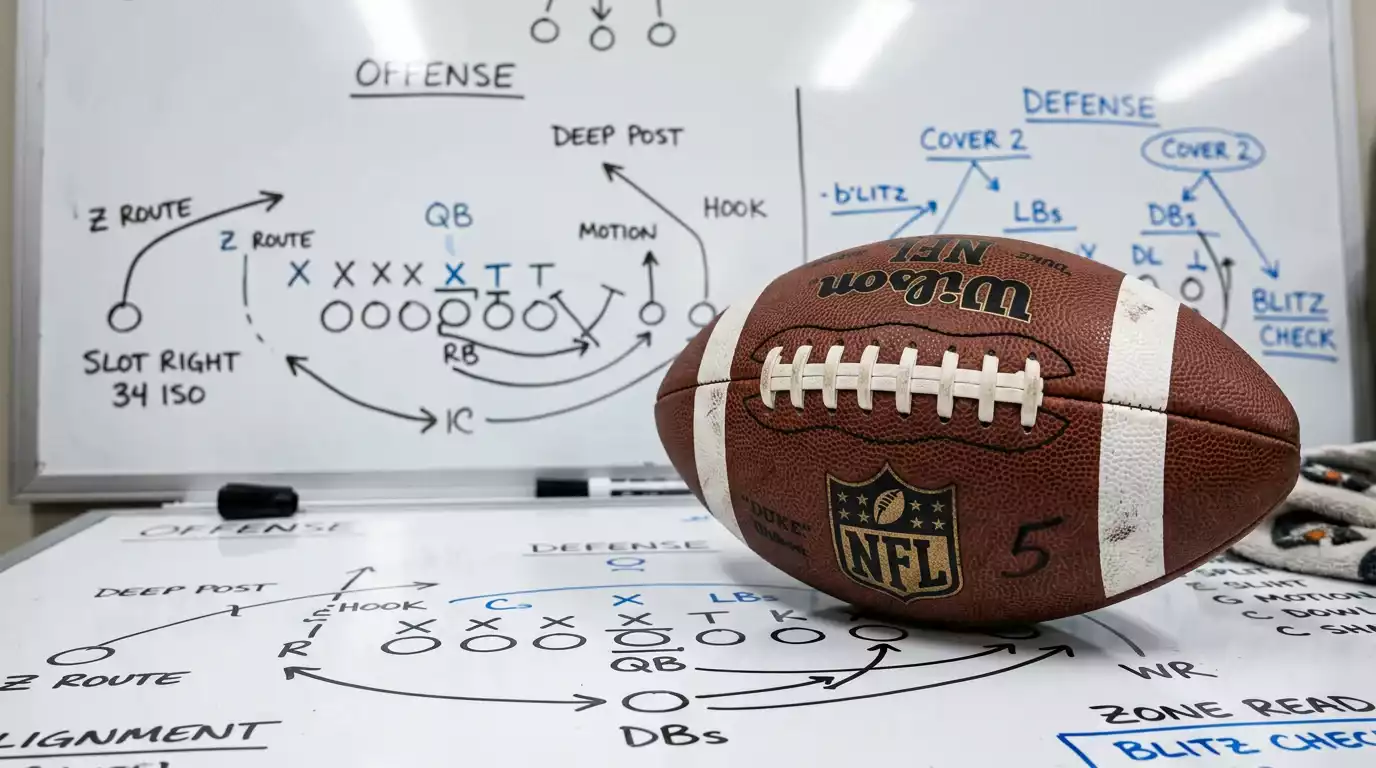
Familiarity is the primary engine. Divisional teams play each other twice every season, with the schedule often placing the second meeting 8-12 weeks after the first. By that second game, both coaching staffs have a full game’s worth of current-season film on the opponent — tendencies, personnel groupings, red zone plays, third-down preferences. That film study advantage compresses the scheme gap between teams.
The effect is most visible in totals. Second-meeting divisional games trend toward the under compared to first meetings. After losing to a divisional rival in week 4, a defensive coordinator has 10 weeks to identify what went wrong and install counter-schemes. That preparation doesn’t show up in aggregate defensive rankings because it’s matchup-specific — it only manifests against this particular opponent. The totals market, which relies on season-wide averages, misses this adjustment.
Divisional games also feature heightened emotional intensity. Players know each other personally. Rivalries carry grudges from previous seasons. That intensity translates into harder-hitting defence, more aggressive play-calling on both sides, and a general tightening of execution that favours the underdog. The favourite is expected to win comfortably; the underdog is playing the most motivated game of their season. That motivation asymmetry shows up in the data.
ATS Patterns in Divisional Matchups: Underdogs and Second Meetings
Two ATS patterns in divisional betting have held up consistently enough for me to incorporate them into my weekly process. The Seattle Seahawks’ 12-5 ATS record in 2025 included several divisional covers that illustrated these patterns perfectly, while the Kansas City Chiefs’ poor ATS season saw them fail to cover in multiple divisional games where they were heavy favourites.
Pattern one: divisional underdogs of 3-7 points cover the spread at a higher rate than non-divisional underdogs of the same size. The familiarity factor compresses margins, and bookmakers don’t fully adjust the spread downward to account for it. My adjustment: I subtract 0.5-1 point from the posted spread for divisional games when the underdog is in the 3-7 point range. If the adjusted number changes my side, I take the dog.
Pattern two: the second meeting between divisional rivals produces tighter outcomes than the first. Whichever team lost the first matchup typically performs closer to the spread (or covers outright) in the rematch. The losing coaching staff has had weeks or months to study the film and adjust. The winning team, meanwhile, often comes in with the same gameplan that worked the first time — which the opponent has now prepared for. I weight the second meeting as a slight underdog-lean situation regardless of which team is favoured.
Both patterns are modest edges, not guaranteed profits. They shift the probability by 2-4 percentage points, which sounds small but is significant in a market where the breakeven threshold is 52.38%. Combine them with other edges — closing line value, sharp money analysis, weather adjustments — and the cumulative effect becomes meaningful.
Coaching Familiarity and Scheme Adjustments in Rematches
Coaching matchups are amplified in divisional games because the coaches face each other every single year. A head coach who has played against the same division rival 10+ times has accumulated a deep library of situational tendencies — what the opponent does on third-and-long near midfield, how they approach two-minute drills, which plays they favour in the red zone.
This accumulated knowledge creates an arms race of scheme adjustments. The first meeting in a season often looks like the previous season’s second meeting — both coaches start where they left off. The second meeting in a season features the adjustments to the first meeting’s adjustments. The complexity spirals, and the result is games that look nothing like what power ratings or season averages would predict.
For bettors, the implication is that recent head-to-head results matter more in divisional games than in non-divisional matchups. If Coach A beat Coach B 35-10 in week 6, the market might expect a similar result in week 14. But Coach B has had 8 weeks to study what went wrong and install counter-measures. The spread for the rematch is anchored partly to the first result, creating value on Coach B’s side if the adjustments are likely to be effective.
I look at three things before betting a divisional rematch: the margin in the first meeting (larger margins suggest more room for the loser to adjust), the coaching staff’s historical pattern of mid-season adaptation (some coordinators are better adjusters than others), and any personnel changes between the two games (injuries or lineup shifts that alter the matchup dynamics). These three factors together give me a better read on the rematch than the raw spread does.
Divisions With the Strongest Betting Trends Right Now
Not all divisions produce the same betting dynamics. Some are balanced and competitive, generating tight games with frequent underdog covers. Others are top-heavy, with one or two dominant teams and two weak ones, producing large spreads and less reliable trends.
In the 2025-2026 cycle, the most bettor-friendly divisions for the patterns I’ve described are those with competitive parity — where three or four teams have realistic playoff aspirations. In parity-rich divisions, the spread between the best and worst team is smaller, which means divisional games produce more games in the 3-7 point spread range where underdog ATS value is strongest.
Top-heavy divisions create a different dynamic. When the division leader is a 12-win team and the cellar dweller is a 4-win team, divisional spreads can reach 10-14 points. At that level, the familiarity factor still compresses margins, but the talent gap is large enough to override scheme adjustments in many cases. I’m less aggressive with underdog spread bets in top-heavy divisional matchups where the spread exceeds 10 points.
Track divisional records throughout the season. By week 10, you’ll have enough data to identify which divisions are producing tight games and which are producing blowouts. Concentrate your divisional betting in the tight divisions and reduce exposure in the blowout-prone ones. This simple filter improves the win rate on divisional underdog bets by several percentage points in my experience.
Do underdogs cover the spread more often in NFL divisional games?
Yes, though the edge is modest. Divisional underdogs in the 3-7 point spread range cover at a higher rate than non-divisional underdogs of the same size, driven by the familiarity factor — coaching staffs have extensive film and scheme knowledge of divisional opponents, which compresses margins. The second meeting between divisional rivals shows an even stronger underdog lean, as the losing coaching staff from the first meeting has had weeks to study and adjust. The edge amounts to 2-4 percentage points above baseline cover rates.
Should I adjust totals for the second meeting between division rivals?
Yes. Second divisional meetings tend to produce lower totals than first meetings because both defensive coordinators have current-season film of the opponent’s scheme and can install targeted counter-measures. The totals market, which relies on season-wide averages, often doesn’t fully account for this matchup-specific defensive preparation. A slight lean toward the under on second divisional meetings — particularly when the losing team from the first meeting has a historically adaptive coaching staff — has been a consistent edge in my tracking data.
Published by the nfl Betting Strategies team.